KRISHNA.MISTRY Email me

Open to APM roles / Gurgaon, India

Krishna Mistry

I've seen quick commerce from the brand side. Now I want to build the product.

I was in the founder's office at 10on10 Foods, a stone milled flour brand, while it went from one city to sixteen in six weeks. I was hired for digital and ended up running the North region supply chain, setting up the inventory systems behind our dark store listings, and working closely with the Blinkit Gourmet team on our flour range. Engineer by training, PGP in General Management from Masters' Union.

1 → 16 Cities live
in six weeks
₹3L → ₹1Cr Monthly
revenue
8 North region
markets run
14% Lower
sourcing cost
Krishna Mistry
Open to APM roles

Krishna Gaurishankar MistryGurgaon, IN

Why meFor a product
team

Three seats I've already sat in

A quick commerce product has to work for the customer, the seller and the dark store at once. I've been close to two of those, and built for the third.

01 · THE SELLER

I've been the brand

Listed products on Blinkit and Flipkart, compared channel margins, sat through ad tool demos, and worked with the Blinkit Gourmet team on what our flour needed to look like on their shelf.

02 · THE OPERATION

I've kept the shelf full

Vendors, purchase orders, inbound transport, e-challans and dispatch across eight North region markets, plus the inventory system that synced dark stores and regional hubs.

03 · THE BUILDER

I can ship

B.E. in AI and Data Science. I built the MyTribe dashboard 0 to 1, automate with n8n and LLM workflows, and work in SQL, Python, GA4 and Power BI.

WorkCase studies
2024 to 2026

Problems I owned, written the way a PM would

What was broken, what I did about it, what changed, and what it taught me about building product.

Apr → Sep 202610on10 Foods
North region

01 Supply chain · 10on10 Foods

Keeping sixteen cities in stock

Problem

We sold in one city. The plan was sixteen in six weeks, across Blinkit, Zepto, Instamart and our own store. A listing that goes live with no stock behind it is worse than no listing at all, so supply had to land before demand did.

What I did
  • Took the North region supply chain end to end: onboarded the regional vendor base and negotiated sourcing rates down 14%.
  • Owned raw material purchase orders, inbound transport, e-challans and dispatch to fulfilment hubs across eight markets.
  • Visited manufacturing facilities and transport yards to see where things actually slowed down, instead of guessing from a sheet.
Outcome
1 → 16Cities, six weeks
₹3L → ₹1CrMonthly revenue
−14%Sourcing cost

Product lensOn quick commerce, availability is the product. The customer never sees the vendor call or the truck. They see "in stock" or "out of stock" in ten minutes. Everything upstream exists to protect that one state.
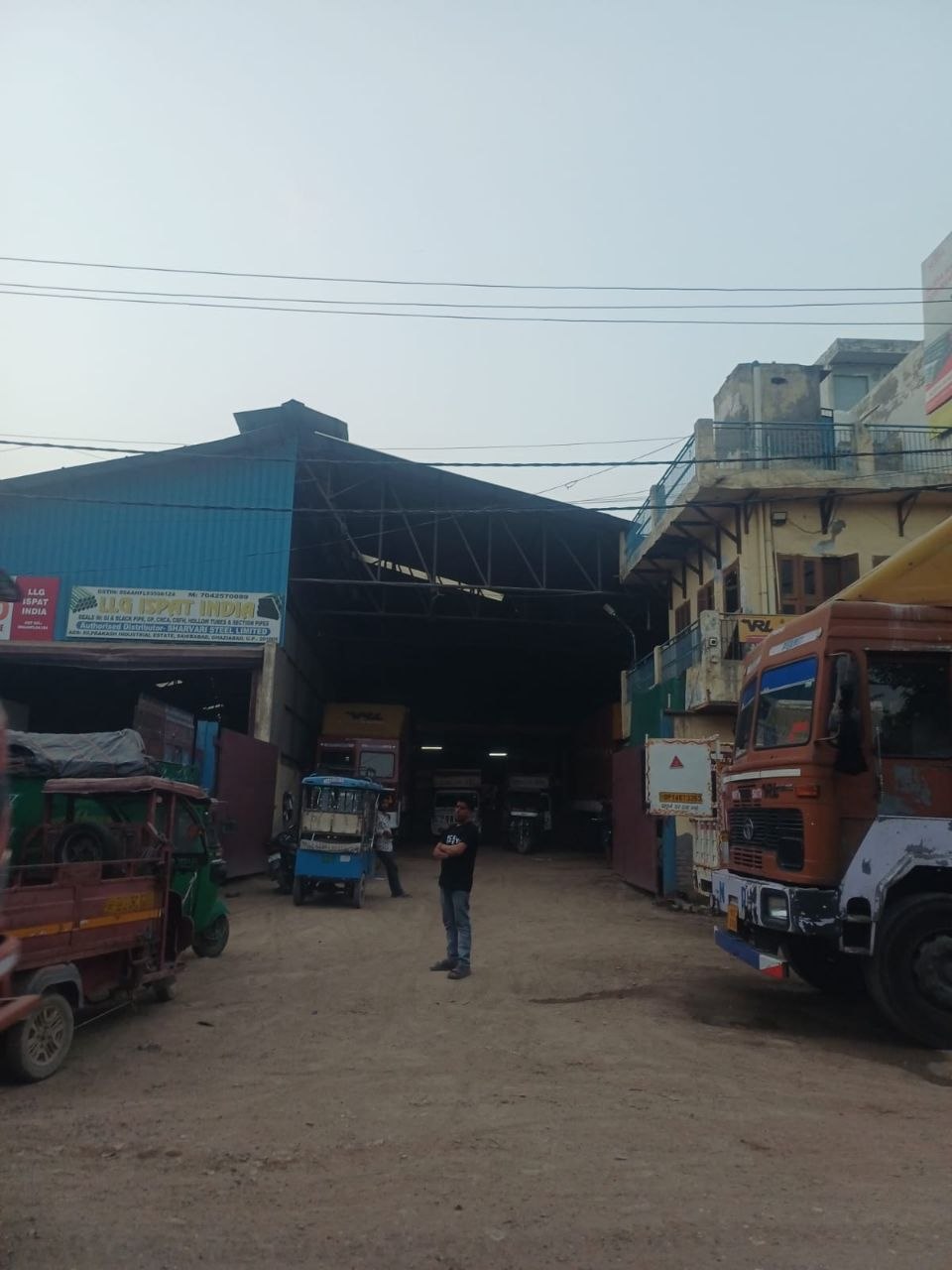
Krishna standing in a logistics yard with trucks and a warehouse shed
On the ground in the North region. Most supply problems only show up when you go and look.

Footprint00 / 16

Week zero Bengaluru, one city.
Week six sixteen cities taking orders across quick commerce and D2C.
202610on10 Foods
Systems

02 Product discovery · 10on10 Foods

Choosing the stack, one demo at a time

Problem

Orders came in from quick commerce, marketplaces and D2C. Stock sat in dark stores and regional hubs. Reconciling the two was manual and always a step behind. We needed one source of truth at a price an early stage brand could pay.

What I did
  • Took around 12 vendor product demos and compared them on fit, effort and cost.
  • Explored an Odoo and Unicommerce combination. It fit well but cost too much for our stage, so I dropped it.
  • Set up Zoho ERP and OMS across dark stores and regional hubs to sync live inventory.
Outcome

Fewer stockouts and less reconciliation lag. Orders, stock and billing stopped living in three different places.

Product lensTwelve demos taught me how a B2B product wins or loses a buyer. The ones that won showed my problem in the first five minutes. The ones that lost showed me their feature list.

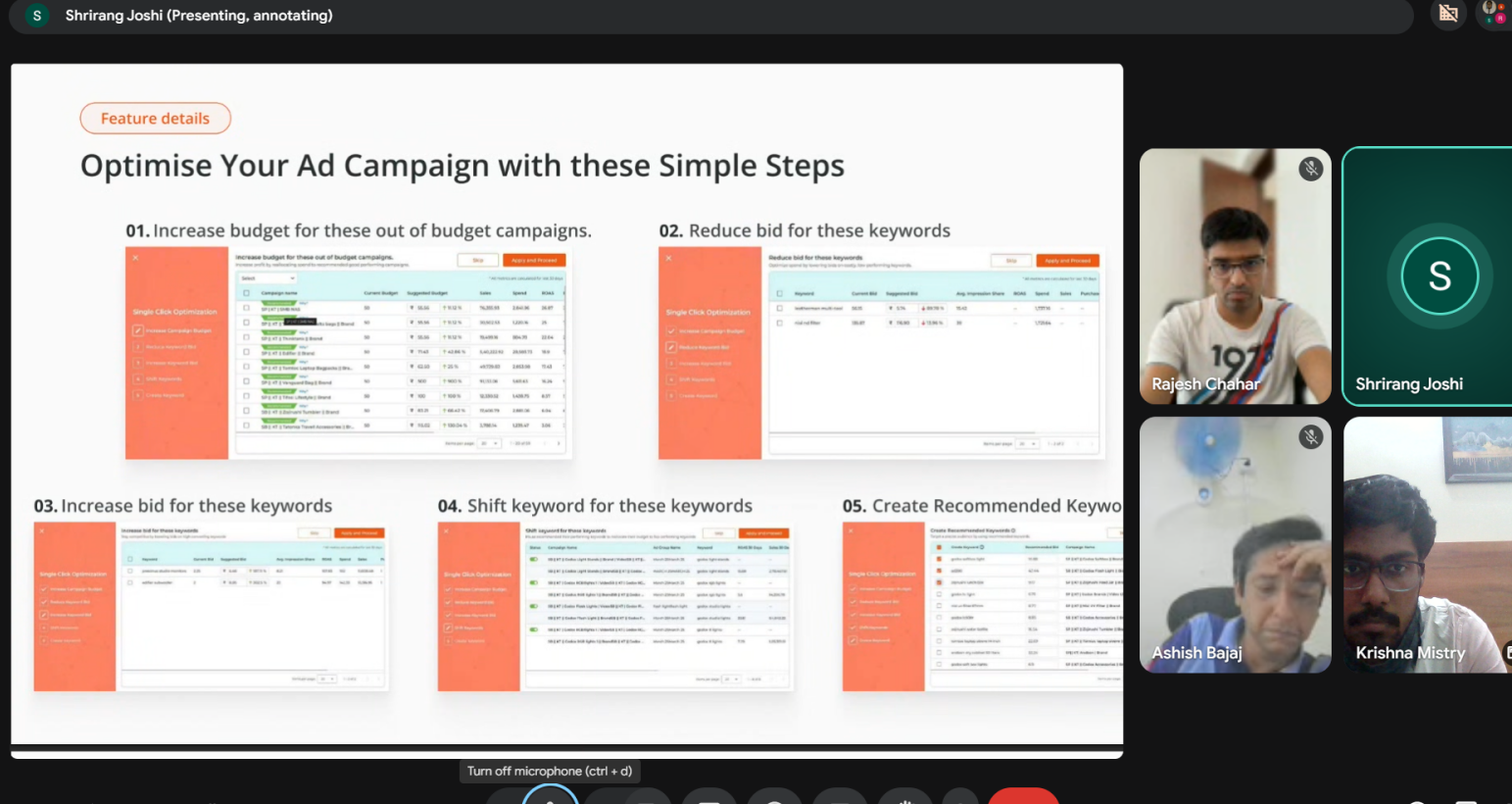
Video call with a vendor walking through ad campaign optimisation steps
A vendor walkthrough of quick commerce ad optimisation. One of roughly twelve product demos I took while choosing our tools.

The stack behind sixteen citiesApr to Jun 2026

Order
sources
Quick commerceBlinkit, Zepto, Instamart
MarketplacesFlipkart and others
D2COwn website
Capture
OMSOne order queue for every city and channel
Record
Zoho ERPPurchase orders, procurement, billing
Live inventoryDark stores and regional hubs in sync
202610on10 Foods
Channels

03 Channels and partners · 10on10 Foods

Selling on Blinkit, and building for Blinkit Gourmet

Problem

Every channel looks like revenue. Not every channel is margin. And a premium shelf like Blinkit Gourmet has its own bar for product, supply and consistency that a young brand has to meet.

What I did
  • Built channel level unit economics across D2C, quick commerce and wholesale to compare contribution margins and decide the order of the city rollout.
  • Worked closely with the Blinkit Gourmet team alongside the founder on our flour products, turning their requirements into sourcing targets and operating SLAs. Did the same in conversations with Country Delight.
  • Managed product listings on Blinkit and Flipkart, and ran the digital side: website, SEO and content automation, churn analysis and Meta campaigns.

Product lensA platform's requirements are a spec for the seller. The clearer that spec is, the faster a small brand can meet it. When it's vague, the brand guesses, and the customer pays for it in empty shelves.

How I compared channelsPer order

D2C

  • Selling price
  • Payment and shipping
  • Acquisition spend
  • Returns

Quick commerce

  • Selling price
  • Platform margin
  • Ads and visibility
  • Inbound to dark stores

Wholesale

  • Selling price
  • Trade margin
  • Freight
  • Credit days
= Contribution margin per channel → which city and channel go live first
Nov 2024 → Mar 2025Pune
Founder

04 0 to 1 product · MyTribe

One dashboard for two very different users

Problem

Event organisers and sponsors want different things from the same event. Organisers manage attendees and logistics. Sponsors want deliverables and proof of outcomes. Nothing put both in one place.

What I did
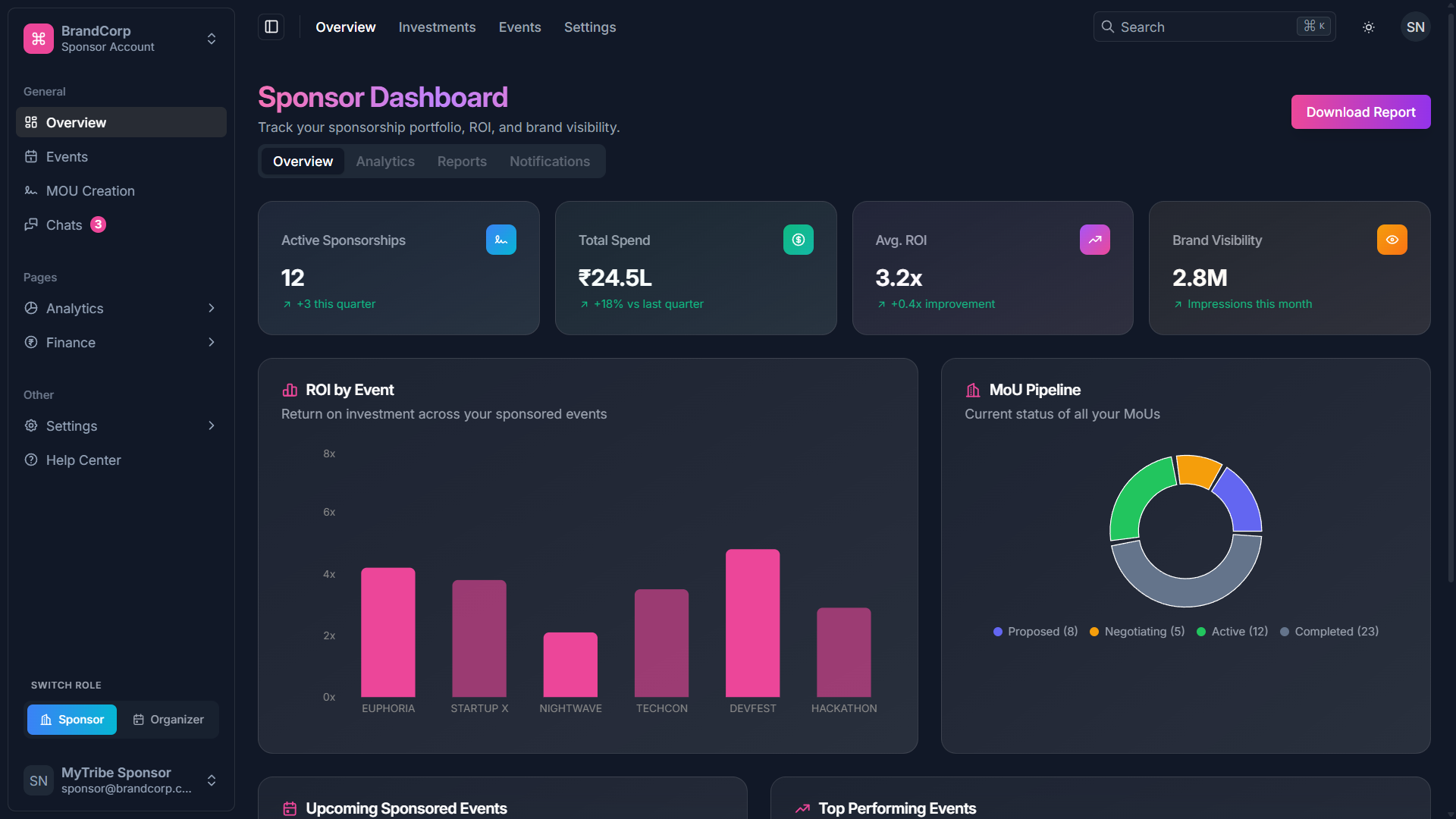
  • Started MyTribe and built a prototype dashboard bringing event management, attendees, sponsorship deliverables and outcomes into one view.
  • Explored seven to eight large Holi events in Pune, with close to one lakh potential attendees in a single day.
  • When sponsorship deals didn't close in time, we changed course and ran food stalls at three to four locations for a modest profit. Ran vendors, contracts and staffing for 6+ events, the largest with 80,000+ attendees.
Outcome

A working prototype and real operating experience. We later paused the venture. It taught me that ownership includes knowing when to change direction.

mytribe-dashboard-frontend.vercel.app Open live ↗
MyTribe dashboard prototype
Oct 2025Gurgaon
Strategy sprint

05 Funnel diagnosis · Cityfurnish

Finding where customers actually dropped off

Problem

A rental marketplace losing customers between sign up and delivery. Everyone had a theory. One month to find the real answer.

What I did
  • Audited the customer journey end to end and traced 30% of verification friction to KYC still being done by hand.
  • Redesigned it as an automated three step digital flow to cut drop offs and dispatch delays.
  • Traced delivery delays back to procurement buffers rather than logistics.

Where the journey brokeCustomer funnel

Order placedCustomer picks furniture and pays
KYC verificationManual checks: 30% of verification friction
DispatchWaits on verification and procurement

Also

Sep 2024 → Apr 2025

Project Lead, GURU

Open source RAGOps framework. Secured over US$100K in compute grants, including NVIDIA H100 GPUs, by pitching at global forums, and led sprints that scaled compute capacity 17×.

17×
Aug → Sep 2025

Founder's Office, Coop AI

AI legal workflow platform. Set up operations and an automation layer on n8n, Relevance AI and AWS SageMaker. Client decision turnaround came down 40%.

−40%
College

Marketing Executive, TEDxDYPIT

Joined 20 days before the event with sponsorships stuck. Cold called, emailed and walked into local businesses, and closed multiple sponsorships within 10 days. 550+ attendees.

10 days
Product notesFrom the
brand's seat

Three things I'd want to test

Hypotheses from running a brand on quick commerce. Questions to test with data, not conclusions.

01 · AVAILABILITY

Small brands plan supply weeks ahead

Every new city came down to one question: will this store have stock when the order comes? Large brands have planners for that. A twelve person brand has a spreadsheet and a guess.

Test Does a simple store level demand outlook for small brands reduce their out of stock days?

02 · SELLER TOOLS

Explain the "apply" button

One click ad recommendations are fast. But a founder spending their own money wants to know what clicking will cost and what it should return before they trust it.

Test Does showing expected spend and orders next to each recommendation raise adoption among smaller sellers?

03 · PREMIUM SHELF

On a gourmet shelf, the story sells

A customer can't touch stone milled flour through a screen. The reason to pay more is in how it's made, and a standard product page has little room for that.

Test Does richer product content (process, sourcing, freshness) lift conversion for gourmet items?

Written from one brand's point of view, so each of these needs checking against platform data first.

MethodHow I
work

Four habits I keep coming back to

I didn't read these somewhere. Each one cost me something to learn.

Go and look

Problems are rarely what they look like from a dashboard. Cityfurnish's delivery delays looked like a logistics problem for months. They were a procurement problem. You find that by walking the process and talking to whoever touches it.

Ship the ugly version first

A spreadsheet that works this week beats a system that works next quarter. Much of what kept new cities selling at 10on10 started crude and got rebuilt once we knew it survived.

A marketing problem isn't always a marketing problem

I was hired for digital. Half the "marketing" issues turned out to be stock, product information or operations. So I followed them there.

Own the number, not the task

The North region was never a task list. It was eight markets that needed stock on the shelf. Framing it that way changes what you do on a Tuesday, and who you call when something slips.

BackgroundWhere it
came from

An engineering degree, then business school

One taught me to build the system. The other taught me to make the case for it.

Education

2025 → 2026Gurgaon

PGP Rise (MBA), General Management

Masters' Union School of Business

Global immersion at SDA Bocconi, Milan, in strategy, innovation and sustainability. Visited Ferrari in Maranello and worked on a team case on Ducati's turnaround, covering premium positioning and modular supply chains.

MBA
2021 → 2025Pune

B.E. Artificial Intelligence and Data Science

Savitribai Phule Pune University

Machine learning, NLP and data engineering. Coordinator at the Entrepreneurship Development Cell, where I met 100+ founders through meetups and pitch sessions. Mathematics Olympiad gold medalist.

B.E.

Toolkit

ProductAnalysis and
research
Funnel analysisChurn analysisCustomer research Unit economicsP&L modellingSQL PythonGA4Power BIExcel
Quick commerceOps and
channels
BlinkitZeptoInstamartFlipkart Vendor negotiationPurchase ordersInventory planning SOP designZoho ERP and OMS
AIAutomation
n8nLangChainRAG Claude, GPT, Gemini workflowsSEO and content automation
Certifications
Machine Learning Specialization, DeepLearning.AI Google Digital Marketing and E-commerce McKinsey.org Forward Program
ContactGurgaon, India
Replies fast

I want to build the product I used to sell on.

I'm looking for an Associate Product Manager role where seller, customer and operations problems meet. If that's the seat you're hiring for, I'd love to talk.